When we talk about the pros and cons of living in Portland Oregon, Southwest Portland deserves a much closer look than it usually gets. This is one of the city’s most dynamic areas, and it offers a combination that is genuinely hard to find elsewhere: wooded hills, bigger homes, larger lots, quick city access, suburban convenience, and a few surprisingly walkable neighborhood centers.
At the same time, Southwest Portland is not an automatic fit for everybody. The terrain, housing style, school boundaries, sidewalks, and tax differences can change dramatically depending on exactly where we are looking. If we understand those trade-offs up front, Southwest Portland can check a lot of boxes.
Why Live in Southwest Portland?
Most people moving to Portland first gravitate toward the east side. Neighborhoods such as Irvington, Sellwood, Laurelhurst, and Mount Tabor represent what many people picture when they think of classic Portland: historic architecture, walkable commercial streets, restaurants, coffee shops, and dense neighborhood energy.
Southwest Portland feels different. It is generally less walkable, more spread out, and less urban at first glance. But that is exactly why it can work so well for someone who wants Portland access without living in the middle of Portland’s densest neighborhoods.

For people comparing the pros and cons of living in Portland Oregon, Southwest Portland often gets missed because it does not fit neatly into the usual categories. It is not quite the east side urban experience, yet it is not quite Beaverton, Tigard, Lake Oswego, or Happy Valley either. In a lot of ways, it is the in-between option that offers the best of both worlds.
VIEW HOMES FOR SALE IN THE PORTLAND METRO
Southwest Portland Home Prices & Lot Sizes
At the time of this comparison, Portland’s median sale price was around $580,000, while Southwest Portland’s median sale price was about $725,000. That higher number matters, but it does not tell the whole story.
Southwest Portland has larger homes on average, fewer small bungalows, fewer condos, and fewer townhomes than many other parts of the city. We also tend to see more usable space around the homes. A fifth-acre, quarter-acre, or even third-acre lot is fairly common in many neighborhoods. That is not acreage living, but it is a meaningful difference from denser Portland neighborhoods.
This is one of the major pros and cons of living in Portland Oregon. We may pay more for a home in Southwest Portland, but that price often includes a larger house, more privacy, and a larger yard. The area also has a relatively low population density, with roughly 100,000 people spread across a large footprint.
North vs. South Southwest Portland
Southwest Portland is not one single experience. The major dividing line is Beaverton Hillsdale Highway, often called BH locally. North and south of BH can feel like two very different parts of the city.
The northern section is much more connected to downtown Portland and the West Hills. The southern section leans more suburban, with closer ties to Lake Oswego, Tigard, Beaverton, and Washington Square.
There are also different public high school patterns. Much of north Southwest Portland feeds into Lincoln High School downtown, while the southern area is associated with Ida B. Wells High School near Hillsdale. Elementary and middle school boundaries vary too, so it is worth confirming the exact assignment for any individual property.
When considering the pros and cons of living in Portland Oregon, this north versus south distinction should be one of the first filters we use.
West Hills Living in Southwest Portland
The north section includes downtown Portland south of Burnside and the West Hills immediately behind it. This is where neighborhoods such as Portland Heights, Southwest Hills, and Healy Heights offer a completely different setting from the flatter areas of the city.
The streets curve, the lots slope, and the trees are everywhere. Many homes have a wooded setting, possible city views, and quick downhill access to downtown. Highway 26 also provides efficient east-west access toward Hillsboro and the west side.
Lincoln High School is located right in downtown Portland and has a newer facility after the former building was replaced. For some households, having a high school in the middle of the city is a major positive. For others, it is simply not the experience they want. It is one of the more personal pros and cons of living in Portland Oregon.
Best Southwest Portland Neighborhoods
Southwest Portland has a broad mix of neighborhood styles. In the south and central portions, we often look at Hillsdale, South Burlingame, Maplewood, Ashcreek, Marshall Park, Collins View, and Dunthorpe. Dunthorpe is unincorporated Multnomah County, but it remains closely tied to Southwest Portland geographically and in feel.
Many of these neighborhoods were built out primarily from the 1940s through the 1960s. That gives us a lot of mid-century character, ranch homes, split levels, tri-levels, and mature landscaping instead of endless rows of newer construction.
South Burlingame, Hillsdale, and Multnomah Village offer somewhat more density and activity. Maplewood, Ashcreek, and surrounding areas provide a more residential and suburban atmosphere. The right choice comes down to whether we prioritize neighborhood activity, lot size, architectural character, or easier suburban access.
City vs. Suburban Living in Southwest Portland
North Southwest Portland gives us a stronger connection to downtown. From the West Hills, we may feel surrounded by trees and removed from the city, but downtown is still right down the hill. That proximity is a major advantage for people who want city access without living in a high-density neighborhood.
Southwest Portland south of BH feels much more connected to the suburbs. Lake Oswego is often 10 to 15 minutes south, Tigard is nearby to the southwest, and Beaverton sits directly west. Washington Square Mall is an easy destination, and downtown Beaverton offers another growing dining and shopping area.
This is where Southwest Portland becomes a particularly interesting part of the pros and cons of living in Portland Oregon. We can live within Portland while having quick access to suburban shopping, restaurants, and services.
Why Multnomah Village Stands Out
Multnomah Village is the standout walkable district in Southwest Portland. It is probably the closest match in the area to the neighborhood commercial streets people love on Portland’s east side, although it is smaller, quieter, and more quaint.
The village has restaurants, food carts, local businesses, and a historic streetscape that still feels connected to its development in the 1940s and 1950s. There are also pickleball courts coming into the area, which adds another community amenity to an already sought-after location.
Multnomah Village has almost a small beach-town commercial district feeling. It gives us the walkability and activity that are harder to find in other parts of Southwest Portland, while still feeling separated from the intensity of central Portland.
The Pacific Northwest Feel in Southwest Portland
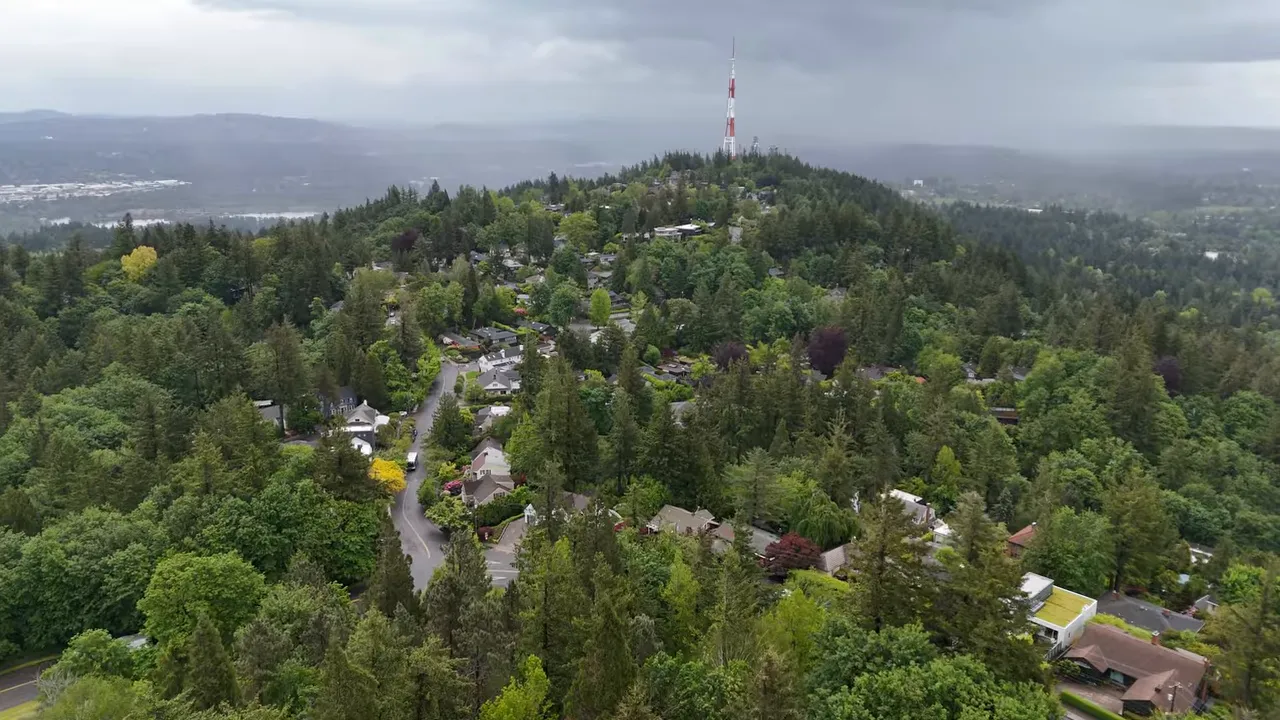
For many people, the West Hills are where the Pacific Northwest image really becomes real. Trees, winding roads, hillsides, views, and houses tucked into the landscape create a setting that feels very different from flatter or more built-out metro areas.
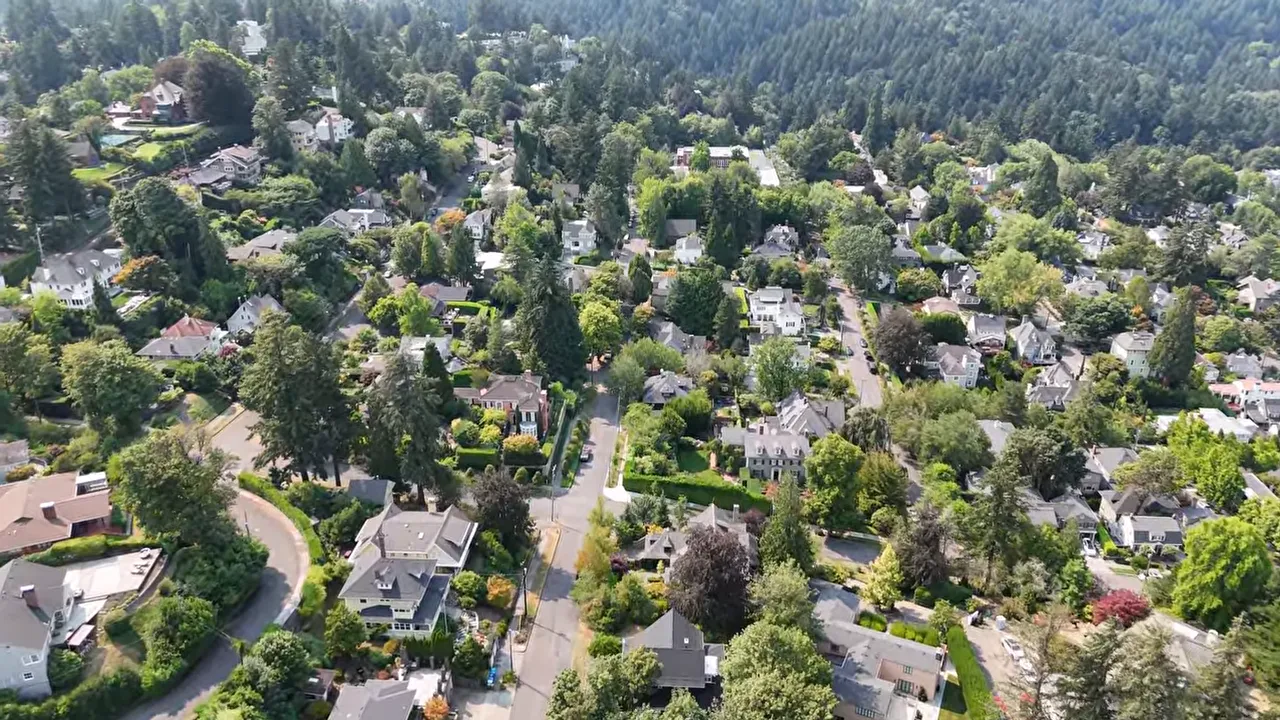
This can be especially appealing for people coming from Texas, Phoenix, Southern California, or another dramatically different climate and landscape. The West Hills provide that deeply wooded experience while remaining close to downtown.
There is also a lot more here than residential streets. Marquam Nature Park has extensive trails, and Washington Park includes the Japanese Garden and the Oregon Zoo. Neighborhoods near OHSU, Portland Heights, Southwest Hills, and Healy Heights put us close to outdoor amenities without giving up city proximity.
West Hills Pros and Cons
The West Hills are beautiful, but we need to be realistic about what comes with that setting. Sloping terrain can mean steep driveways, slanted lots, less usable yard space, and sometimes no garage. Heavy tree cover can also limit natural light.
A property may look amazing from the street but have a yard that is difficult to use or maintain. Driveway access and parking can feel very different from a flatter neighborhood. These practical considerations are important when evaluating the pros and cons of living in Portland Oregon.
The point is not to avoid the West Hills. It is to make sure we are buying the lifestyle intentionally. If views, trees, trails, and proximity to downtown matter more than a flat yard and easy driveway, the West Hills can be a great match.
Best Suburban Neighborhoods in Southwest Portland
If the West Hills are not the right fit, Southwest Portland has plenty of neighborhood options that feel much more like traditional suburbs. Bridlemile, Hayhurst, Maplewood, Ashcreek, West Portland Park, Crestwood, and far Southwest Portland all offer that more relaxed residential setting.
These areas were largely built from the 1950s through the 1970s. We see ranches, split levels, tri-levels, and smaller pockets of newer development. There is a lot of old charm here, along with mature trees and a more spacious feel than central Portland.
One common downside is inconsistent infrastructure. Some streets do not have sidewalks, which surprises people who expect a more conventional suburban layout. Still, walking paths and trails are available throughout the broader area.
Most Walkable Areas in Southwest Portland
Outside downtown, the most walkable parts of Southwest Portland are Multnomah Village and Hillsdale. Hillsdale has restaurants, bars, coffee shops, and more activity than much of the surrounding residential area. It is also close to Ida B. Wells High School.
Gabriel Park is another major draw near this central Southwest Portland zone. It is a large park with a community center and recreation center, giving nearby neighborhoods a substantial public amenity.
For anyone who values walkability as part of the pros and cons of living in Portland Oregon, these pockets are worth prioritizing. We should still be clear about what walkable means here. It is neighborhood-scale convenience, not the continuous urban commercial density found in many east-side districts.
Historic Homes & Parks in Southwest Portland
South Burlingame has a different kind of appeal. It features older homes, many built in the 1920s, 1930s, and 1940s, giving the neighborhood more historic charm than many of the mid-century areas farther south and west.
Along Terwilliger Boulevard, there are a few restaurants and bars, including the Tryon Creek area. South Burlingame, Hillsdale, and Multnomah Village form a small central corridor with a little more activity and character than the more purely suburban sections.
Farther south, Arnold Creek is a standout neighborhood near Lake Oswego. Arnold Creek runs through portions of the area, creating a wooded, tree-lined setting. Tryon Creek State Natural Area is nearby and offers an extensive trail system. It is smaller than Forest Park, but having that amount of nature close to home is a major advantage.
Southwest Portland vs. Washington County
The western edge of Southwest Portland sits close to the Multnomah County and Washington County line. On a map, that boundary can look significant. In day-to-day life, it often feels surprisingly arbitrary.
Garden Home, Raleigh Hills, West Slope, and West Haven are just over the line in Washington County, yet they can feel very similar to nearby Southwest Portland neighborhoods. Garden Home is only about five minutes from Multnomah Village and has a similar feel to Ashcreek and Hayhurst. Raleigh Hills and West Slope often compare well with Bridlemile, with historic homes and mid-century character.
The county line does not suddenly change the landscape, home style, or commute patterns. Highway 217 is often a more meaningful practical boundary. Inside 217, many Washington County neighborhoods still have very similar access to Portland.
Portland Address, Washington County Benefits
Many communities just inside Washington County still have Portland mailing addresses because they are unincorporated areas rather than part of Beaverton proper. This creates an interesting option for people who want a Southwest Portland lifestyle but are open to a different county.
Mezger is more Tigard-oriented and feeds into the Tigard school district. Outside of Mezger, many nearby unincorporated communities feed into the Beaverton School District.
This is an important part of the pros and cons of living in Portland Oregon. We may find nearly identical neighborhood character and convenience on either side of the county line, but the financial picture can be very different.
Portland vs. Beaverton School Districts
In Multnomah County, Southwest Portland properties generally fall within Portland Public Schools. Just across the county line in many nearby Washington County communities, homes usually feed into Beaverton School District. Mezger is the notable nearby area that feeds into the Tigard school district.
Neither district can be reduced to one simple answer. Individual schools have different ratings, programming, boundaries, and experiences. The key is to verify the assignment for the specific address rather than assuming an entire neighborhood has one school outcome.
School district boundaries are among the most consequential practical details in the pros and cons of living in Portland Oregon, especially when two similar neighborhoods sit only minutes apart.
Why Buyers Skip Southwest Portland
The biggest reason some buyers decide against Southwest Portland is not the hills, the homes, or the lack of sidewalks. It is taxes.
Once we are inside Multnomah County, property taxes are often higher than comparable homes just over the Washington County line. On average, the difference may be in the range of 25% to 30%, which is significant when we are shopping near the top of a budget.
As an example, an $800,000 home in Portland proper or elsewhere in Multnomah County might have annual property taxes of roughly $12,000 to $17,000. A similar $800,000 home in Garden Home, Raleigh Hills, or West Slope might fall closer to $8,000 to $12,000 per year. The exact amount depends on the home’s age, lot size, and other property details, but the gap can absolutely influence a buying decision.
Multnomah County Taxes Explained
Property taxes are only part of the calculation. Multnomah County also has the Preschool for All personal income tax for higher earners. At the stated thresholds, single filers pay an additional 1.5% on income above $125,000, while married couples filing jointly pay an additional 1.5% on income above $200,000.
For a household earning $250,000, $300,000, or $400,000, that additional tax can become meaningful. It does not mean Southwest Portland is a bad decision. It simply means we should account for the full cost of ownership rather than focusing only on the purchase price.
For many people, the location, trees, schools, neighborhood character, and access justify the higher taxes. For others, the difference makes Washington County a better fit. This is one of the clearest pros and cons of living in Portland Oregon to consider before making an offer.
Is Southwest Portland Worth Living In?
Southwest Portland is worth it when we want flexibility. We can find wooded West Hills homes with views and trail access. We can find quiet mid-century neighborhoods with larger yards. We can live near Multnomah Village or Hillsdale for more walkability and local businesses. Or we can position ourselves close to Lake Oswego, Tigard, Beaverton, and Washington Square for a more suburban routine.
The trade-offs are real: higher purchase prices in many areas, challenging hills, uneven sidewalk coverage, less urban energy than the east side, and higher Multnomah County taxes. But for the right lifestyle, Southwest Portland is one of the most well-rounded areas in the metro.
The best approach is to compare properties on both sides of the county line, look carefully at the terrain and usable outdoor space, verify the school assignment, and calculate the real tax impact. That is how we make the pros and cons of living in Portland Oregon work in our favor instead of discovering surprises after the move.
VIEW HOMES FOR SALE IN THE PORTLAND METRO
FAQs About Living in Southwest Portland
Is Southwest Portland more expensive than Portland overall?
At the time of this comparison, Southwest Portland’s median sale price was about $725,000, compared with roughly $580,000 across Portland overall. Southwest Portland homes are often larger and commonly have larger lots, which helps explain part of the price difference.
What is the most walkable area of Southwest Portland?
Multnomah Village is the most distinctive walkable neighborhood center in Southwest Portland. Hillsdale also offers restaurants, bars, coffee shops, and neighborhood activity. Both are more walkable than much of the surrounding area.
What are the best Southwest Portland neighborhoods for a suburban feel?
Bridlemile, Hayhurst, Maplewood, Ashcreek, West Portland Park, Crestwood, and far Southwest Portland offer some of the strongest suburban-style options. These areas often have mid-century homes, mature landscaping, and a less dense feel.
Are West Hills homes difficult to live in?
They can be more challenging because of steep driveways, sloped lots, limited yard usability, and less natural light under heavy tree cover. In return, the West Hills provide trees, privacy, trails, possible views, and fast downtown access.
Why do some buyers choose Washington County over Southwest Portland?
Washington County areas such as Garden Home, Raleigh Hills, and West Slope can offer similar housing styles and proximity to Portland with potentially lower property taxes. Many of these communities also have Portland addresses and are close to Southwest Portland amenities.
Does Southwest Portland have higher taxes?
Multnomah County property taxes can be roughly 25% to 30% higher on average than comparable homes in nearby Washington County. Higher-income households may also be affected by the Multnomah County Preschool for All income tax.
If you’re considering a move and want to figure out whether the pros and cons of living in Portland Oregon really match your budget and lifestyle especially around Southwest Portland and the county-line tax differences, let’s talk. Call or text 503-925-5645 or book a FREE consultation here and I’ll help you narrow down the best neighborhoods, verify school assignments, and estimate the real cost of ownership.
READ MORE: Moving to West Linn Oregon: Best Neighborhoods, Schools & Where to Live