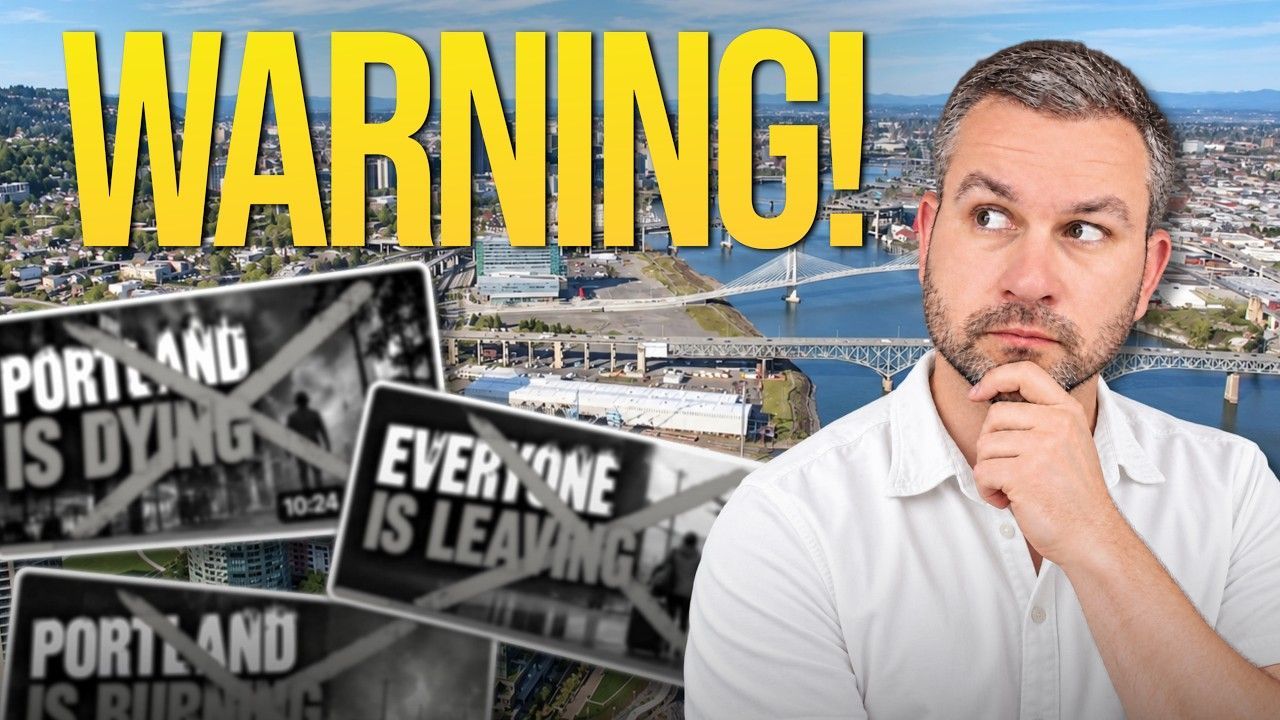
If you are thinking about moving to Portland Oregon, you probably want more than the usual postcard version of the city. Yes, the waterfront is beautiful. Yes, the cherry blossoms are stunning. Yes, there is still a lot to love here.
But if you are serious about moving to Portland Oregon, you also want the honest version. You want to know what is improving, what still needs work, and what all of that means for everyday life.
That is the goal here.
Portland feels a bit like a city in recovery mode. Some numbers are moving in the right direction. A few long running problems are finally getting real attention. At the same time, there are still clear trouble spots, especially around schools, retail theft, homelessness-related impacts, and commercial vacancies downtown.
So if you are weighing moving to Portland Oregon or just comparing it with other options for living in Oregon, here is a grounded look at where things stand.
Table of Contents
- Why Portland Still Feels Compelling
- Public Transit And Downtown Activity Are Improving
- Progress On Homeless Shelter Capacity
- Education Remains A Real Concern
- East Portland Is Feeling The Loss Of Grocery Stores
- The Commercial Vacancy Problem Is Still Serious
- Fire Response Policy Raises Complicated Questions
- A Border Tax Shift Could Change Some Location Decisions
- What This Means If You Are Moving To Portland Oregon
- FAQ: Moving to Portland, Oregon
Why Portland Still Feels Compelling
Even with all the debate around the city, Portland still has something a lot of places do not. It is genuinely enjoyable on a day to day basis. The waterfront is a great example. On a sunny spring day with cherry blossoms out, it is easy to remember why people are drawn here in the first place.
That matters more than people think.
When people talk about moving to Portland Oregon, they usually focus on cost, safety, housing, or taxes. Those things matter, absolutely. But quality of life matters too. Access to the coast, mountains, wine country, walkable neighborhoods, major sports, and an urban core with real personality still gives Portland a lot of pull.
For many people considering living in Oregon, Portland remains the place where the amenities cluster most conveniently. That part has not changed.
Public Transit And Downtown Activity Are Improving
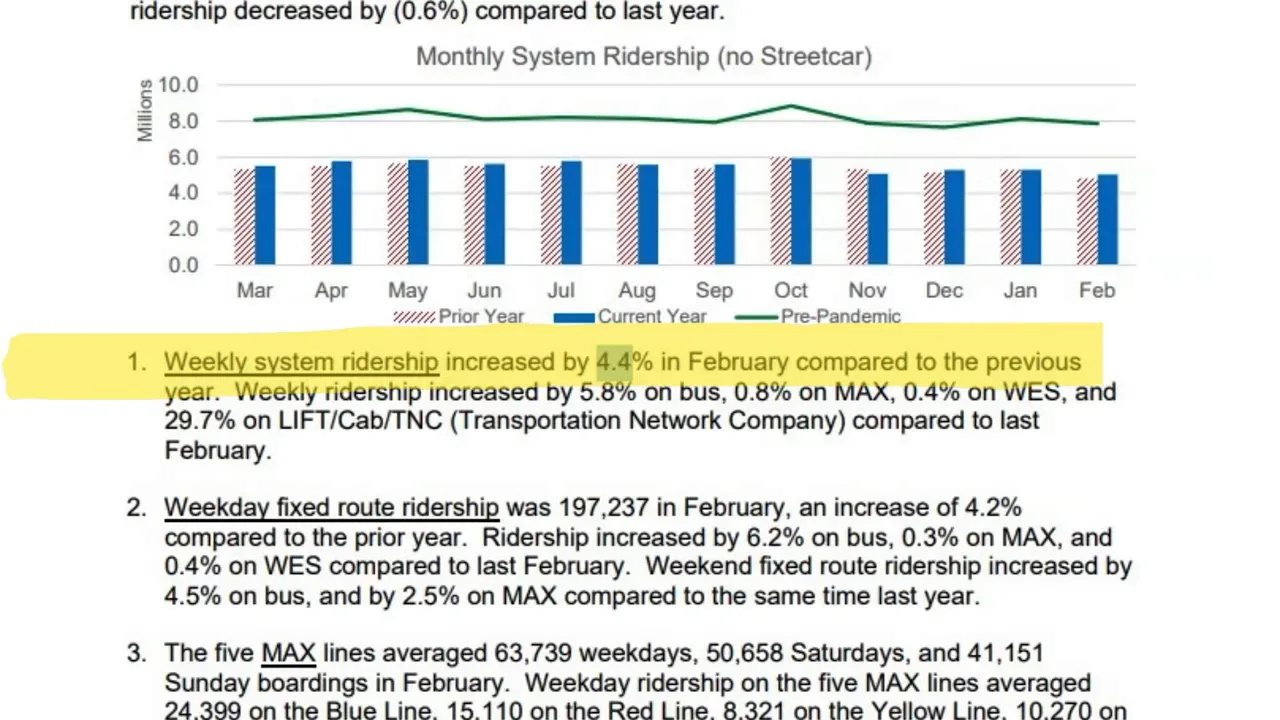
One of the more encouraging signs for moving to Portland Oregon is that public transit use is ticking up again.
TriMet recently reported year over year growth in ridership, with overall weekly system use rising, buses showing an even stronger increase, and weekday fixed routes also moving higher. That may sound like a dry statistic, but it is actually a meaningful signal.
Transit ridership is tied pretty closely to confidence. When people feel safer and more comfortable using transit, ridership tends to improve. When they do not, they start driving, avoiding downtown, or staying away altogether.
Portland went through a stretch after the pandemic where parts of downtown felt unusually empty. Anyone who had not been around for a few years noticed it right away. Streets that used to feel active looked quiet. In some pockets, it felt almost eerie.
That is not fully gone, but it is getting better.
Foot traffic downtown has not returned to pre-2020 levels, but it has been growing steadily, especially on weekends. Recent pedestrian counts show a noticeable increase from one year to the next, which matches what many people have been sensing on the ground.
For someone moving to Portland Oregon, that is important because it suggests the city core is not frozen in decline. It is still rebuilding, still uneven, but moving in a healthier direction than it was a few years ago.
Progress On Homeless Shelter Capacity
You cannot talk honestly about moving to Portland Oregon without talking about homelessness. It has shaped the city’s public image and, more importantly, it has affected daily life in visible ways.
One recent point of progress is the city hitting the mayor’s target of adding 1,500 emergency overnight shelter beds. That does not mean the homelessness crisis is solved. Far from it. The broader goal of getting everyone off the streets into either temporary or permanent shelter has not been fully reached.
Still, this is the kind of development that deserves to be counted as a real step forward.
Ambitious goals do not always get met in full, especially with a challenge this large. But increasing shelter capacity matters because it gives the city more options, improves emergency response, and creates a clearer path away from unmanaged street camping.
For people considering living in Oregon, the key point is this: Portland is still dealing with the issue, but there are signs of actual movement instead of pure drift.
Education Remains A Real Concern
If schools are a major factor in your decision, this is one area where you need to do extra homework before moving to Portland Oregon.
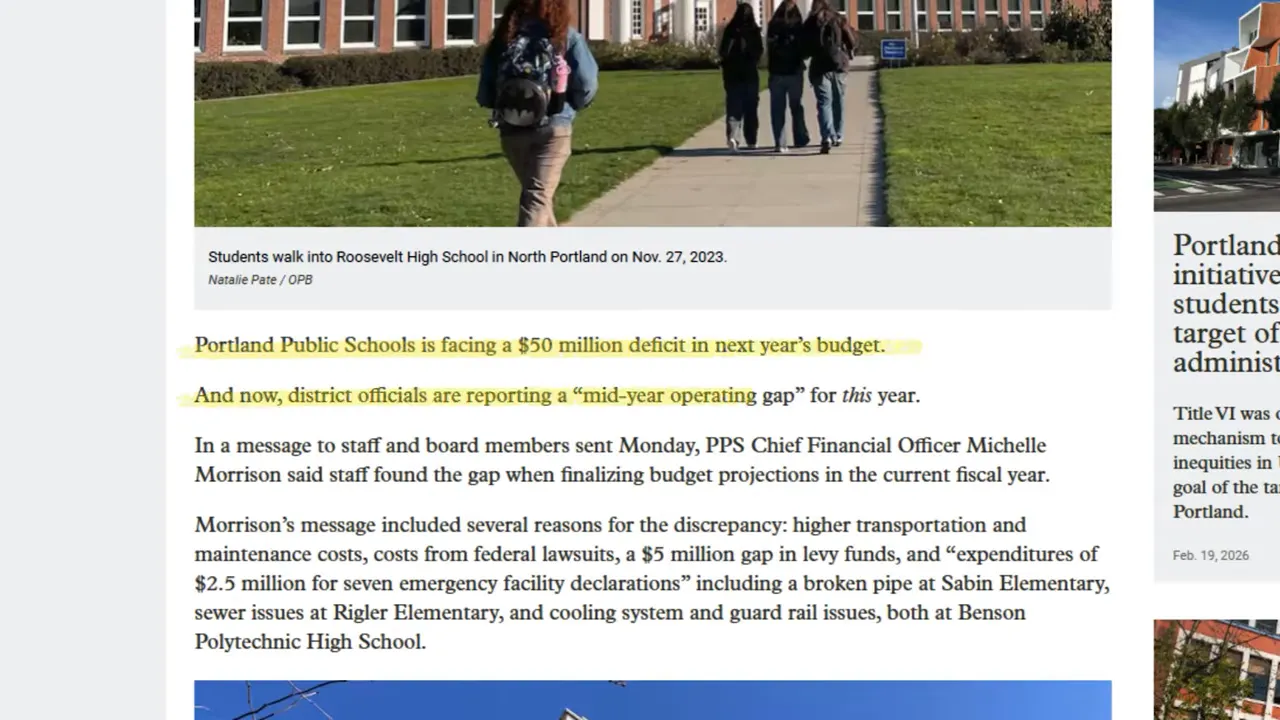
Portland Public Schools is dealing with a major budget deficit, and it is not the only district under pressure. Other districts in the broader metro area, including Beaverton, Tigard- Tualatin, and North Clackamas, have also faced shortfalls.
That is not a small issue. Oregon was not exactly dominating the rankings for education to begin with, so budget instability only makes a complicated situation more complicated.
There is also the separate issue of school closures tied to changing enrollment and population trends. Even some stronger districts have had to close elementary campuses because there simply are not enough students to justify keeping every building open.
That does not mean families should avoid the area. It means school quality varies a lot more than some people assume.
If you are moving to Portland Oregon with kids, broad city level summaries are not enough. Neighborhood specific research matters. District boundaries matter. Program availability matters. Commute patterns matter. This is one of those topics where the details really change the experience.
East Portland Is Feeling The Loss Of Grocery Stores
Another area that still needs improvement is retail stability, especially in East Portland.
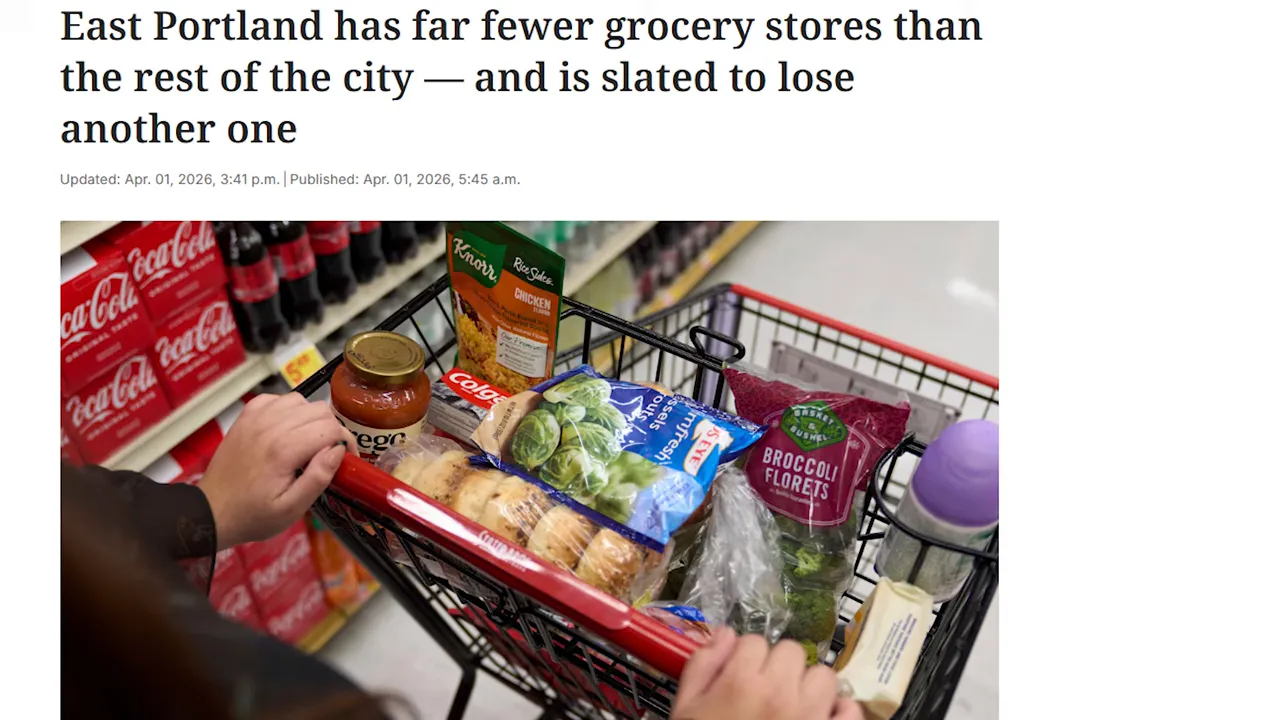
A Grocery Outlet on Sandy Boulevard is closing, and that follows the loss of a Fred Meyer location in East Portland as well. That matters because grocery access is not just a business story. It is a daily life story.
When stores leave, neighborhoods lose convenience, jobs, and in some cases basic access to affordable groceries. And when the reason includes repeated theft and vandalism, it signals a deeper problem than one struggling location.
Portland and much of the West Coast tend to have more trouble with property crime than with violent crime relative to some other parts of the country. That does not make it harmless. Theft, burglary, shoplifting, and vandalism wear on a city over time. They also influence where businesses are willing to stay, invest, or expand.
For anyone moving to Portland Oregon, this is one of those issues that can vary a lot depending on which part of the metro you are considering. One neighborhood may feel stable and well served. Another may be dealing with a much thinner retail landscape.
The Commercial Vacancy Problem Is Still Serious
If there is one issue that says a lot about the city’s broader economic health, it is commercial vacancy.
Portland has had stretches where downtown office vacancy ranked among the highest in the country. Empty storefronts and half full office towers do more than hurt appearances. They drag down business momentum, reduce street activity, and put pressure on property values.
That is why a proposal to charge landlords fees for vacant commercial buildings has sparked so much debate.
On paper, the idea sounds simple enough. Empty buildings are a problem, so penalize vacancy and push owners to lease the space. But in practice, it is not that clean.
Landlords cannot snap their fingers and create tenants. If demand is weak, demand is weak. Yes, an owner can lower rents, but lower rents also tend to reduce the building’s value. And many owners would rather hold out than lock in lower numbers that reset the market.
There is another issue too. Once new fees or restrictions enter the picture, buyers take that into account. If a potential purchaser sees a city becoming more expensive or more difficult to operate in, that can shrink the buyer pool. And when fewer buyers want an asset, values fall.
That is not just a problem for a handful of wealthy building owners. Large commercial properties are often held through investment groups with many smaller partners. So when values take a hit, the pain can spread wider than people assume.
For somebody moving to Portland Oregon, the takeaway is not that downtown is doomed. It is that the city is still trying to figure out how to revive its core without making the investment climate even tougher.
Fire Response Policy Raises Complicated Questions
One of the more surprising developments is the Portland Fire Department shifting how it handles outdoor fires.
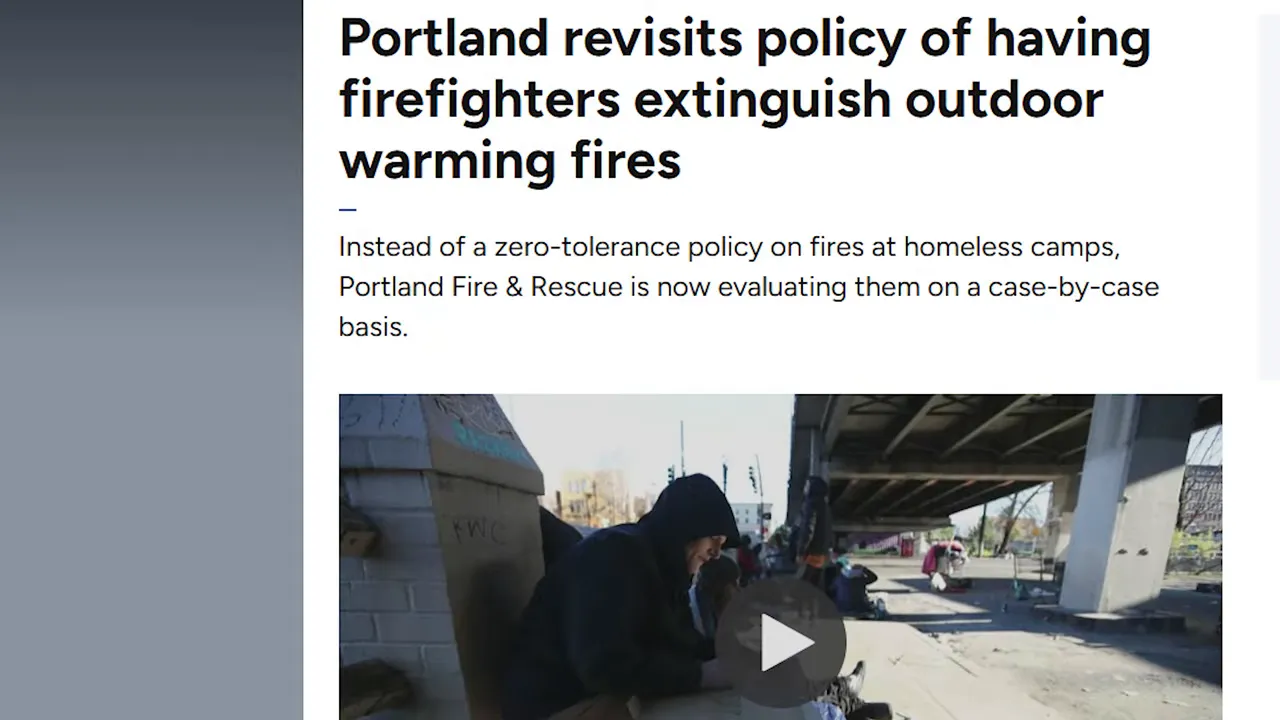
Because of the volume of calls, firefighters are no longer responding to every small fire automatically. The focus is now on fires that are not contained. The reasoning is resource management. Too much time was being spent dealing with frequent small camp related fires, which could delay response to medical emergencies and other higher priority incidents.
This is one of those stories that can be interpreted in a few different ways.
On one hand, it shows how stretched city resources have been. On the other, it reflects an effort to triage in a more practical way. Neither interpretation is especially comforting on its own.
For people thinking about moving to Portland Oregon, it is another example of Portland’s reality right now. Some policies are not being made in ideal conditions. They are being made in response to systems under pressure.
A Border Tax Shift Could Change Some Location Decisions
Here is an interesting wrinkle for anyone comparing Portland with nearby Washington cities.
For a long time, people near the Oregon-Washington border have known about the tax advantage game. Oregon has no sales tax. Washington has had no state income tax. So one common setup has been living in Washington to avoid income tax while shopping in Oregon to avoid sales tax.
That arrangement may become less attractive for some high earners.
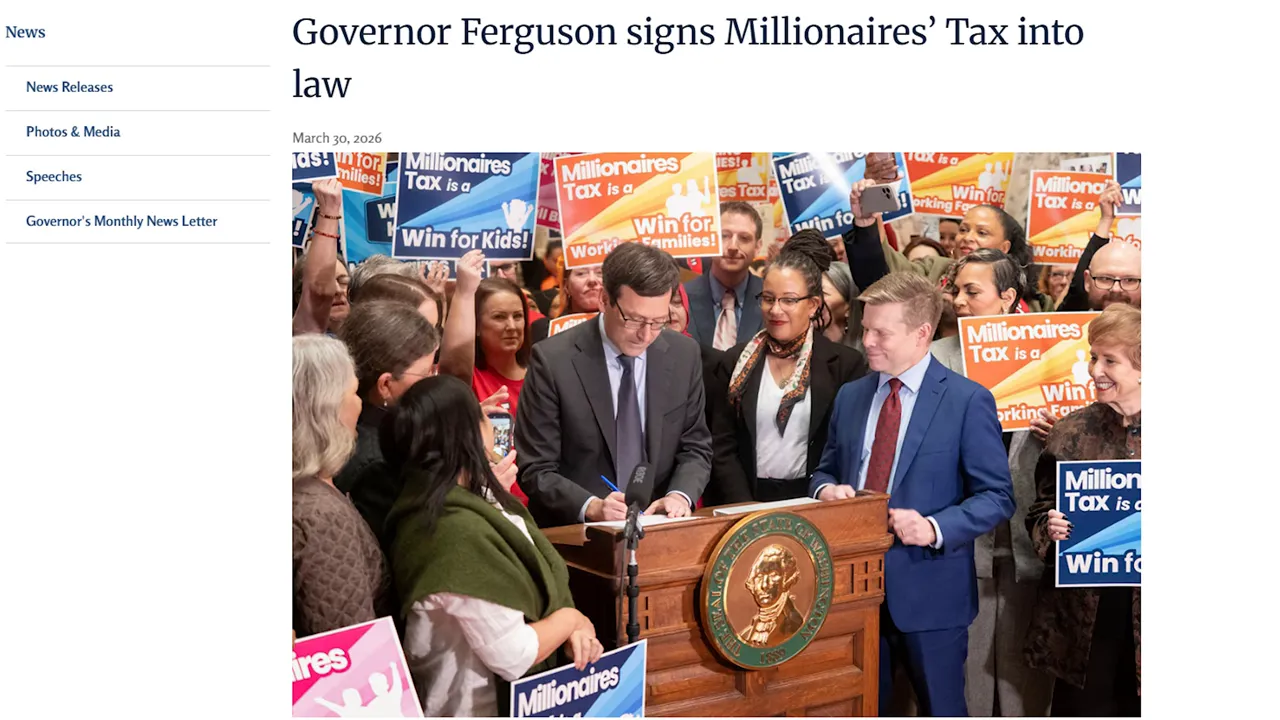
Washington has introduced a new income tax aimed at people making at least a million dollars annually. It only affects a very small slice of earners, but for those households the numbers are large enough to matter. A roughly 10 percent state tax on income above that level is not trivial.
Could that push some affluent households to reconsider where they live, especially if they are remote workers and do not need to stay anchored in Washington? Possibly.
And if they are comparing locations, Portland has some obvious advantages. More central access to Oregon amenities. Better proximity to the coast, mountains, wine country, and major college sports. For some people, that lifestyle appeal might outweigh the tax strategy that used to make Washington more attractive.
This will not reshape the whole market by itself, but it is worth watching if you are moving to Portland Oregon from nearby or trying to decide between Vancouver, Washington and Portland, Oregon.
What This Means If You Are Moving To Portland Oregon
So how is the city doing?
The honest answer is: better in some important ways, still frustrating in others.
The encouraging side:
- Transit ridership is up.
- Downtown pedestrian traffic is improving.
- Shelter capacity has expanded in a meaningful way.
- Portland still offers a lifestyle that is hard to replicate.
The concerning side:
- Schools remain a weak point and require careful research.
- Retail theft and vandalism continue to affect neighborhood services.
- Commercial vacancy is still a major drag on downtown.
- Some public safety and response policies are being shaped by strained resources.
If you are seriously considering moving to Portland Oregon, the biggest mistake is treating the city like one uniform experience. It is not. Portland is highly neighborhood dependent. The school experience changes by district. Retail access changes by area. Commute convenience changes fast. The feel of daily life changes block by block in some parts of the metro.
That is also true for living in Oregon more broadly. A lot of people say they want Portland, but after looking closer they end up preferring a suburb, a nearby community, or even the Washington side of the river. Others come in expecting the city to be in rough shape and are surprised by how much beauty, activity, and momentum they still find here.
Portland is not perfect. It is not fully back. But it is also not frozen in the worst version of itself that gets circulated online.
That is probably the fairest summary.
If your plan involves moving to Portland Oregon, go in with open eyes. Expect tradeoffs. Be selective about area, schools, and lifestyle priorities. And remember that a city can be both appealing and unfinished at the same time.
If you want help sorting through all of this—neighborhood-by-neighborhood, with real housing options and practical next steps—reach out to the Oregon Relocation Team. We can talk through your budget, commute needs, school priorities, and what to realistically expect when you move. Schedule a Zoom call or contact us anytime at 503-925-5645.
FAQ: Moving to Portland, Oregon
Is Moving To Portland Oregon A Good Idea Right Now?
It can be, especially if you value access to outdoor recreation, urban amenities, and Oregon’s overall lifestyle. But moving to Portland Oregon works best when you choose the right neighborhood and go in with realistic expectations about schools, property crime, and uneven recovery in parts of the city.
Is Downtown Portland Recovering?
Downtown is showing improvement. Transit ridership and pedestrian activity are both trending upward, especially on weekends. That said, office vacancy remains a major issue, and some blocks still feel less active than they did before 2020.
Are Schools A Concern When Living In Oregon Near Portland?
Yes. Education is one of the bigger caution areas. Several districts are facing budget pressure, and school quality can vary quite a bit. If schools are a top priority, research specific districts and neighborhoods before making a move.
Is East Portland Losing Grocery Stores?
East Portland has seen notable grocery closures, including a Grocery Outlet and a Fred Meyer location. That reflects broader concerns around theft, vandalism, and uneven retail stability in some parts of the city.
What Is One Of The Biggest Risks In Moving To Portland Oregon?
One of the biggest risks is assuming the whole metro feels the same. Portland is highly location specific. A good move usually comes down to picking the right area for your budget, commute, school needs, and tolerance for urban challenges.
Why Do Some People Choose Portland Over Vancouver Washington?
Some people prefer being closer to Portland’s amenities and more central to Oregon destinations like the coast, mountains, wine country, and college sports. Tax strategy has long favored Washington for some households, but recent policy changes for very high earners could influence a few location decisions.
Read More: The Complete Portland Oregon Relocation Guide: Cost, Neighborhoods & Lifestyle