Why the Portland Housing Market Is Stuck in a Standstill
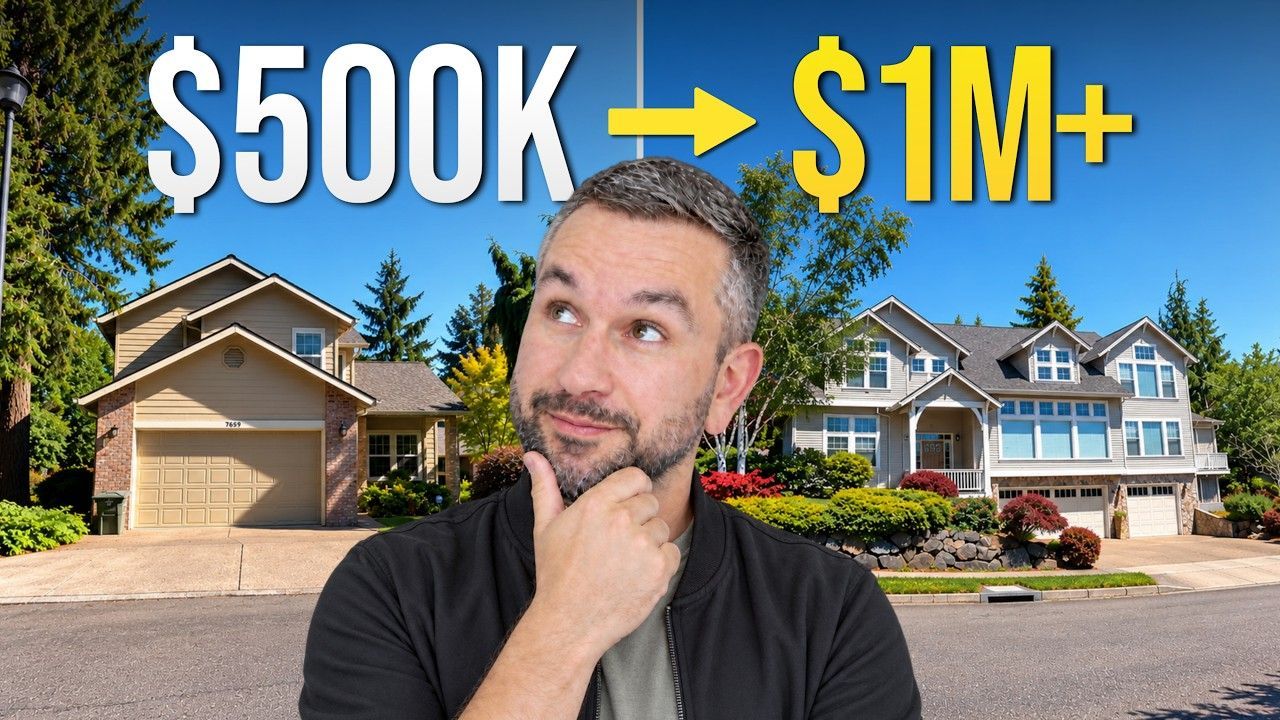
The Portland, Oregon housing market is experiencing an unusual slowdown. Home sales have fallen sharply, with fewer transactions taking place than in any year since 2008. Pending sales are down 21%, and closed sales have dropped 22%. Yet despite the decline in activity, the median sale price is still up 1%.
So, why aren't home prices falling when fewer buyers are purchasing and fewer sellers are moving? The Portland metro area isn't experiencing a typical housing market crash. Instead, buyers and sellers appear to be at a standstill, creating a challenging market where affordability, mortgage rates, and limited movement are shaping real estate decisions.
In this article, we'll break down what's happening in the Portland housing market, why sales are slowing while prices remain relatively stable, which local areas are seeing different trends, and what buyers and sellers can expect in the coming months and years.
Table of Contents
- Interest Rates and Monthly Payments: The 70% Increase
- Why the Market Hasn't Crashed
- The Complete Standstill: Buyers and Sellers at an Impasse
- Two Different Housing Markets Happening Simultaneously
- A Real-Life Example of the Market Standstill
- The Golden Handcuffs: Low Rates Keeping Sellers in Place
- Are Buyers Finally Getting the Upper Hand?
- Portland's Different Real Estate Micro-Markets
- Is This a Crash or a Market Standstill?
- Conclusion
Interest Rates and Monthly Payments: The 70% Increase
When we're looking at where the real estate market is and where it's going to go, it all comes down to what somebody's payment is going to be. Something in the ballpark of 30% of real estate transactions are cash, but the vast majority of people are financing at least some portion of their purchase.
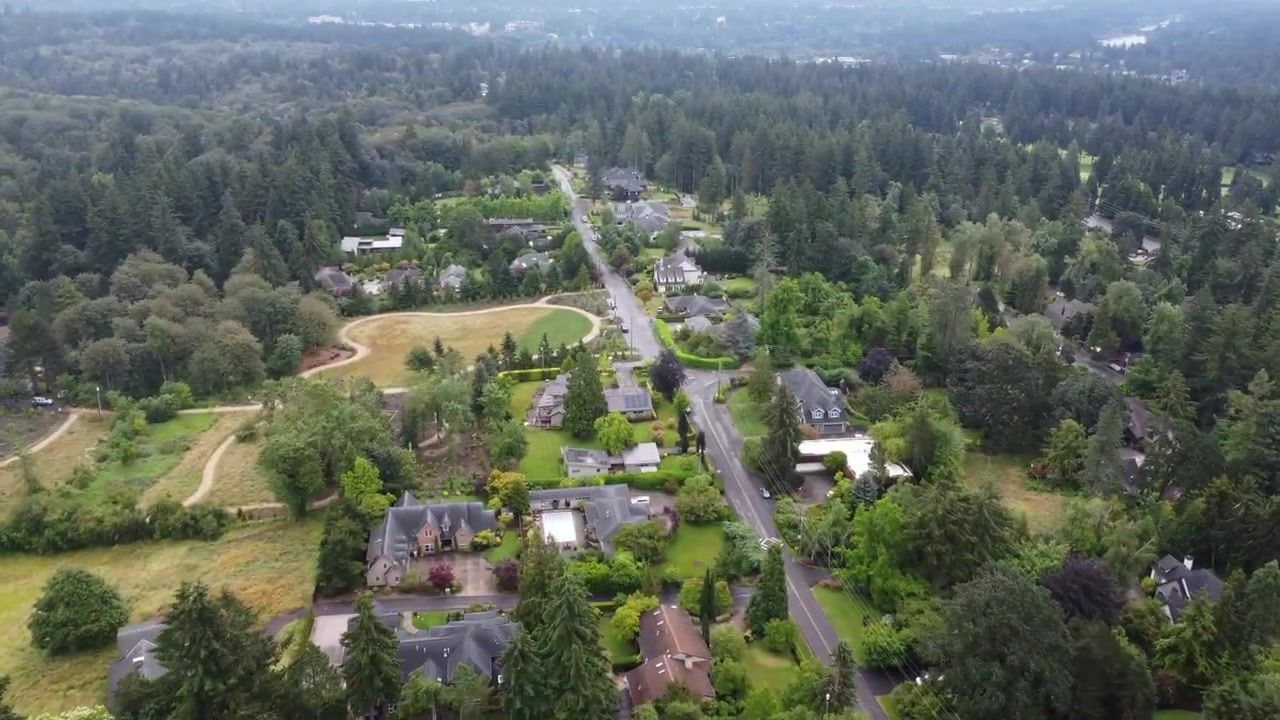
Five years ago in 2021, interest rates were about 3%, and in many cases 2.5% or even lower. If you fast forward to today, interest rates are closer to 7.5%. That is an enormous increase, triple what interest rates were just five years ago. The cost of borrowing money is going to be the biggest influence on what somebody's monthly payment is going to be.
Additionally, home values have not come down. In fact, home values have increased in the past five years, which you expect real estate to do, especially the longer time horizon you have. Despite the real estate market really sort of hitting a wall around 2022 into 2023 and up until today with interest rates around 7% plus on average during that time, we haven't seen home values fall.
The median home value in 2021 when interest rates were 2% and 3% was $509,000. Today, the median home value is $549,000. We've had a relatively modest gain and surprisingly resilient market in a high interest rate environment. But when you look at the impact that has on a monthly payment, you can see why fewer and fewer buyers are jumping into the market.
With 20% down on a $509,000 home five years ago at a 3% interest rate, the payment was about $1,750 a month. Today, median sale price $549,000 with an interest rate of 7.25%, your payment is going to be $2,975 a month. That is a 70% increase on your monthly payment compared to about an 8% increase in home value.
Why the Market Hasn't Crashed
So why hasn't the real estate market crashed in the Portland metro area when you see affordability take this big of a hit? Obviously demand is going to get hit, not true demand, there's a lot of pent-up demand and people that want to buy houses but ultimately can't. You would think that would contribute to prices being peeled back. Well, it's not.
Most homeowners and would-be sellers right now are sitting on a lot of equity, and they have interest rates that are in the 2s and the 3s. They have much lower monthly payments than what they would have to buy into if they sold their home and moved on. And most sellers don't have to sell right now. We're not seeing many distressed situations.
We are seeing sellers that are putting their homes on the market for a price that they would be willing to sell for but doesn't reflect what the market would ultimately bear in terms of what buyers can afford. And because of the equity that these homeowners have, sellers are willing to be more patient.
This is also a big contributor to home values not dropping. Yes, we have stubborn sellers out there who are putting their house on the market higher than it should be. Oregon has led the country in price drops this year, so we have a lot of very ambitious sellers out there and they're holding on, not dropping their price enough or often enough to actually attract buyers.
But the things that are selling, the things that are remodeled and in a nice area with local schools, whatever it may be, this combination of attributes that most people are looking for, these homes are actually selling for a premium. And these are the only homes that are selling overall. That is propping up the median home value or sale price. If everything on the market sold today, we would see a much, much bigger shift downward in home values.
The Complete Standstill: Buyers and Sellers at an Impasse
What that creates is a complete standstill in the market, and the crash that we're seeing is fewer transactions happening this year than last, and that has been the case for the past two or three years. we're seeing about the same amount of homes that have gone on the market this year compared to last year, but we're seeing fewer transactions happen. So what we're seeing is growing inventory, and over time that is another contributor to where you would expect home values to drop.
Now, what we're seeing on paper in the numbers is not reflective of where the market actually is. And there is no doubt that home values have come down way more than median sale prices suggest. We're seeing stubborn sellers and we're seeing the affordability issue on the buy side. And that has created this standstill in the market.
We have a ton of buyers out there who would like to buy but can't, or at least can't buy the property that they would like to be in. And we have a lot of sellers who might want to sell but don't necessarily need to.
Two Different Housing Markets Happening Simultaneously
Something you're not going to hear too many people talk about is there's actually two different markets happening simultaneously. We have a market where there are homes being sold that are in good condition, turnkey, in desirable neighborhoods, on good streets, have this combination of desirable attributes that buyers are holding out for. And then there's everything else.
Because things are so tight when you look at monthly payments, there's not much of an appetite in the market on the buyer's side to get into a home that needs work. Your monthly payment is so high, you're not going to have the budget to remodel the kitchen or do the floors or paint or the combination of things that you might need to do to bring a home up to where you would want it.
The homes that are turnkey, ready to go in desirable neighborhoods, remodeled or new are actually selling relatively quickly. We're even seeing bidding wars. We're seeing homes sell for above the list price pretty often for homes that have the right set of attributes.
The homes that need work, maybe they're on a busy street, maybe the yard isn't quite what somebody would want, anything that has just enough to be a turn-off is not going to sell in the market as it is today. And we are seeing examples of that time and time again.
As a buyer moving into the Portland metro area, this can be really counterintuitive when you look at the home that you would want in the areas that you would want, and then we start shopping for homes and all of a sudden we're getting into competitive situations. Or a home that you saw that you liked and you wanted to see it next week all of a sudden has gone pending. That is pretty counterintuitive when you look at what the numbers are showing and what the market seems to be doing overall.
A Real-Life Example of the Market Standstill
If we apply current conditions today to real-life examples, you can start to see how today's conditions have this cascading effect on the market really being at such a standstill.
Let's say somebody has a house in Beaverton and they want to move up to a house in Lake Oswego , and the person in Lake Oswego wants to downsize to a condo in the Pearl District. Well, the person who owns the home in Beaverton has a 2% interest rate and they're going to have to move up from a house that's maybe worth $700,000 to a house that's worth $1 million, and their payment's going to be three times what it is today.
That is virtually impossible for most people to justify, even if they can pull it together and make it happen on paper. It just doesn't make sense. If you have a monthly payment that's $3,000 a month and you've lived like that for years, all of a sudden to go to a payment that's $7,500 a month, $9,000 a month is an enormous lifestyle change unless you just got a big raise or hit the lottery or whatever it is.
You can see how that first person who wasn't able to sell their house in Beaverton never started the chain to then create the movement that we typically see in terms of people moving up and downsizing and moving around the metro area. Unless interest rates come down significantly, it's going to be hard to justify that person selling to then start that change. Or that house that they were going to buy in Lake Oswego has to come down from $1 million to $850,000 or something like that to then start to make sense. I don't think we're going to see either scenario happen in the short term.
Anecdotally, I've seen people in the past year, two years, three years who had to make that difficult decision of letting go of their historically low interest rate. There are plenty of reasons people need to move, and they're the typical reasons historically why people do. But right now it's more forced move or out of complete necessity than somebody who would like more space or would like a nicer house or would like to live in a different part of town. It becomes a lot harder to make these decisions purely based on preference.
Things like having more kids, job relocation, divorce, death, et cetera are always going to be those drivers of people moving. And we've seen those types of moves continue to happen in the past few years.
The Golden Handcuffs: Low Rates Keeping Sellers in Place
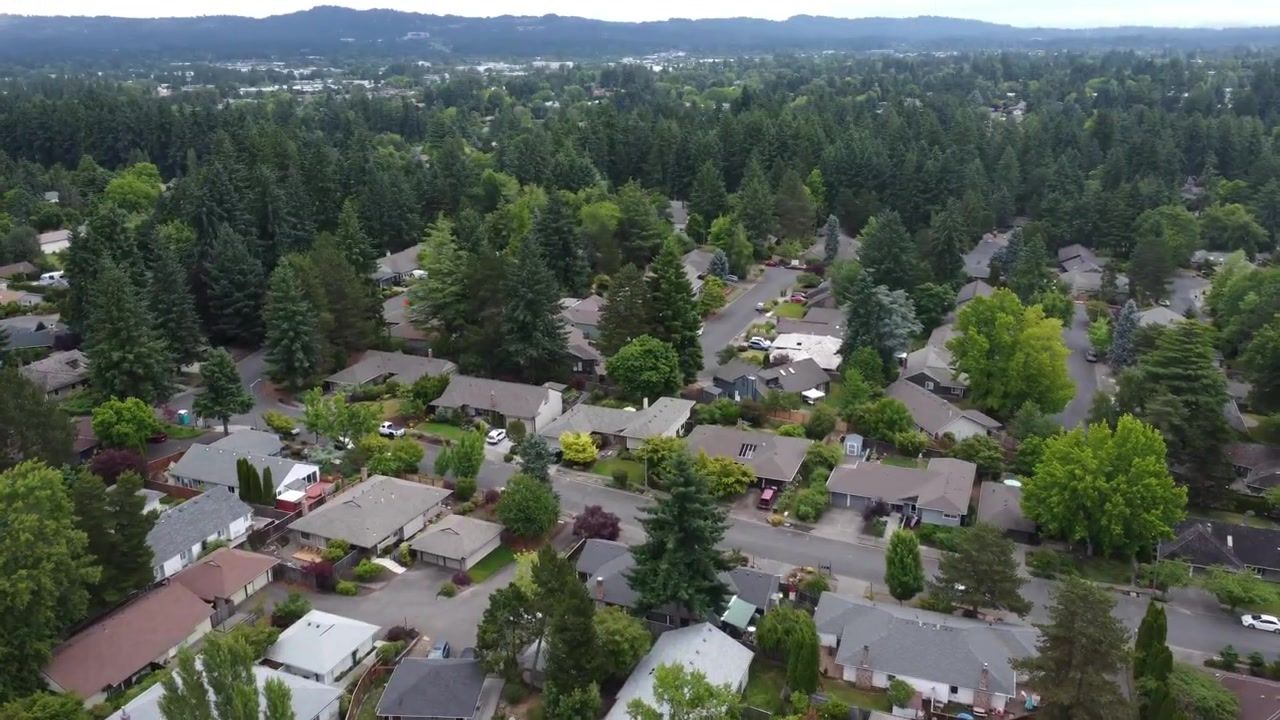
I have started to see people more recently feeling stuck and willing to accept what it will take to move on. And I think we've been seeing these golden handcuffs really slow the market down a ton in terms of people willing to move, people being able to afford to move, even if they're sitting on a fair amount of equity in their home. Because the interest rate is so much higher, it is a lot harder to justify.
A big question that is hard to answer when we look at the coming months and even years is how long people are willing to hold out. There's plenty of things that people can do to justify staying in the home that they're in despite it maybe not being what their plan was initially.
In Oregon, property taxes are relatively predictable. Measure 50, which went into effect in the '90s, caps your assessed value increase at 3% annually. So more or less, you can expect your property taxes to increase by 3% year over year in just about any market. When somebody is in a home, they've seen time and time again people take a good long hard look at where they are and what they have, in particular what they have with their predictable low monthly expenses, housing expenses. Really a pretty easy decision to stay put.
We're seeing a lot of people add on to their house or do a remodel where all of a sudden their house is a lot more comfortable to live in, in lieu of moving on, selling, and moving up, which would be more of a traditional path.
Who Can Actually Afford to Buy Right Now?
So who can actually afford to buy a house in the Portland metro area right now? There's going to be two different groups primarily. There's going to be people who have a significant amount of equity in their current home, or they have a lot of cash, but they have enough of a down payment to get to a monthly payment that is going to be comfortable. And then there's going to be the top 1, 2, 3% of earners in the Portland metro area.
Portland itself does not have a job market that has a high volume or a high percentage of super high-paying jobs. And so there's not a ton in that latter group in terms of influence on the market. We're seeing a lot of downward pressure economically for a lot of the industry across the Portland metro area as it is. So we're not seeing a ton of growth. A lot of that comes down to macro national influences. There are localized issues when it comes to business growth and in particular attracting businesses with a higher percentage of jobs that are paid in that upper tier or upper bracket.
When you actually break these affordability numbers out, I think it is clear that what we were talking about earlier with the golden handcuffs with such a low interest rate is really what is holding so much back when you look at the market today in the Portland metro area. Median home value, $550,000. Median household income is about $130,000. 20% down at about a 7% interest rate, the median household can afford about 95% of what that payment would be.
It's not necessarily that there aren't people or households making the income that would allow them to make a move, but that 20% down payment assumes that somebody's going to have at least $120,000 for a down payment and associated costs with purchasing a home, that is just the down payment too. We're not talking about fixes that you would need to make when you buy the house. We're not talking about buying furniture, painting the house, the things that most people would want to do or have to do when they get into a new home.
People are already relatively squeezed as it is, and to get into a new home, you're going to have to use all the equity probably, or a very big chunk of the equity you have in the home currently. And you would be leaving a very, very low monthly payment to potentially double or triple what your payment is today.
Are Buyers Finally Getting the Upper Hand?
All that said, we're not seeing prices come crashing down. We are seeing an environment where sellers are competing harder, no doubt, and buyers are actually getting the upper hand in most transactions. Even in more competitive scenarios, we're not seeing anything like it was in 2020, 2021, 2022.
We are seeing a ton of seller concessions, interest rate buydowns paid for by the seller, sellers agreeing to repair costs. And again, Oregon has led the country this year in price reductions with over 50% of listings having dropped the price at least once while on the market this year.
We are seeing the seller side of the market, supply side of the market, getting a little bit more realistic. And we are seeing the buy side and the demand side having more favorable outcomes overall.
If you are trying to sell a house in the Portland metro area right now, it is certainly an uphill battle. It's not impossible. And if you price right and if you prepare your home well, and if you do all the things that are going to give you success in a market where there's a lot of inventory that you're competing against and you're competing for a very small buyer pool, there are still opportunities for good outcomes. But we are seeing a lot of sellers still who are being more stubborn and not being all too realistic.
Current Market Numbers
As of recording this, median days on market is 67 days, that's 67 days to get an offer. And in most cases, the guidance is going to be that you drop the price after 30 days. If you've been on the market for a couple of weekends and if you're not getting a lot of activity, if you're not getting a lot of showings, it is 9 times out of 10, 99 times out of 100 maybe, it's going to be pointing to price. You're just priced too high. You're not getting people in the door.
So 67 days on market, you're looking at probably an average of at least one price drop, but maybe more like 1.5 price drops on average for homes that are sitting that long. Inventory is at 4.3 months, which is as high an inventory we've seen in the past five years. That means that if no new homes came on the market, it would take 4.3 months to sell all of the homes that are currently on the market today.
If we look at the past month, pending sales are down 21%, closed sales are down 22%. That is an enormous drop in activity just year over year.
Portland's Different Real Estate Micro-Markets
If you're relocating to the area and if you're thinking about buying a house in the Portland metro area and if you're looking at different areas that are going to be a fit and sort of narrowing things down and going through those steps, what you may have noticed but what you definitely should know is that the Portland metro area is made up of many, many different micro markets, and we see a vastly different picture in one area compared to another.
I think it is safe to say that market-wide we have been pretty flat, and like I was talking about earlier, we do have two markets that are happening simultaneously. The good stuff is still in high competition and sells quickly. Everything else is just sitting and dropping price.
Areas like Tigard and Tualatin and Wilsonville and Sherwood are down 2.7% year over year. Hillsboro is down 1% year over year. I mean, these are premier prime west side suburbs that are very desirable, areas that a ton of people move to when they move into the area.
Then you have areas like West Linn and Lake Oswego that are up about 1.5%, a modest 1.5%, but still have shown some growth and certainly a ton of resilience despite being the most expensive areas or suburbs in the Portland metro area by far.
Then you look at areas like Gresham and Troutdale on the east side of the metro area that have historically been the most affordable places to live in terms of home values in the Portland metro area. Those have actually seen a little bit of growth too. That's not really a surprise because people are looking at what they can afford and where and gravitating toward some of the more affordable areas, and that is creating some resiliency in those markets.
Even within Portland proper and suburbs around Portland, you are going to see a ton of fluctuation from neighborhood to neighborhood. So it really depends on the area that you would want to be in when you start evaluating how the market's performing and then translating that to what you should expect becoming a buyer in this market.
Is This a Crash or a Market Standstill?
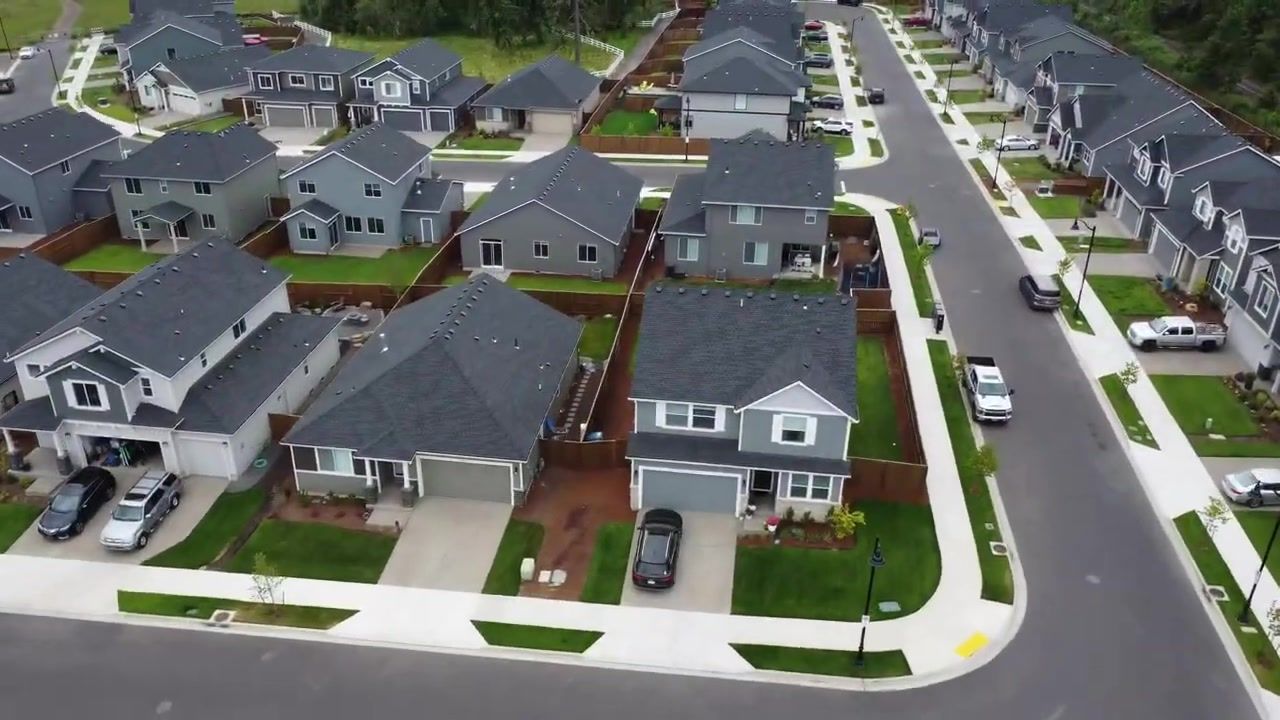
No, the market is not crashing. And if the market crashed and had a rapid correction, that implies that it would be more of a cyclical thing, and we would then see an upswing probably sooner than later because of all this pent-up demand that still exists today and is growing and growing.
But what we're seeing is a standstill with seemingly no end in sight, where we have the golden handcuffs with the low mortgage rates on the seller side. And the sellers aren't forced to move. These aren't distressed situations. In fact, homeowners have historically high equity share in their homes than any other time in recorded history.
On the buy side, we have this affordability problem with such high interest rates and it being so difficult to justify buying into a market where your payment is going to double or triple, or buying into a market where you're going to have to incur some home improvement costs that just aren't feasible because your monthly payment is so high.
Something has to give for us to get out of this standstill that we're currently in. Otherwise, it's going to be an increasingly challenging market in the years to come.
Conclusion
If you are thinking about moving to the Portland metro area and you want to talk about in particular some of these micro markets and what it's like in different areas around the Portland metro area, give us a call/text 503-925-5645 or schedule a FREE consultation here. We can talk more about your move and help you navigate what is admittedly a complicated and counterintuitive market right now.
We've helped so many people relocate to Portland and move to the Portland metro area, and as real estate professionals, we absolutely love to help with that process. We can walk you through which neighborhoods are actually moving, where you're likely to face competition, and where you might find opportunity in this standstill market.
Frequently Asked Questions
Why aren't home prices dropping in Portland if fewer homes are selling?
The homes that are selling tend to be the best inventory, turnkey, remodeled, in desirable neighborhoods. These homes are selling at or above asking price, which props up the median sale price. The homes that need work or have drawbacks are sitting on the market and dropping price, but they're not selling, so they don't factor into the median.
What are the golden handcuffs in the Portland housing market?
The golden handcuffs refer to homeowners who have interest rates in the 2% to 3% range from 2020-2021. Selling would mean giving up that low rate and buying into a new home at 7% or higher, which would double or triple their monthly payment. Most sellers aren't in distressed situations, so they're choosing to stay put rather than take on that payment shock.
Can the median household in Portland afford to buy a home right now?
The median household income in Portland is about $130,000, and the median home value is $550,000. With 20% down and a 7% interest rate, the median household can afford about 95% of that payment. The bigger challenge is coming up with the $120,000 down payment, especially if you don't have equity from a previous home to roll over.
Are there any Portland suburbs where prices are still going up?
Yes. West Linn and Lake Oswego are up about 1.5% year over year despite being the most expensive suburbs in the metro area. Gresham and other east side areas have also seen modest growth because buyers are gravitating toward more affordable options. Meanwhile, west side suburbs like Tigard, Tualatin, Wilsonville, Sherwood, and Hillsboro are down 1% to 2.7%.
Is now a good time to buy in the Portland metro area?
Buyers are getting the upper hand in most transactions right now. We're seeing seller concessions, interest rate buydowns, repair credits, and over 50% of listings have dropped their price at least once. If you find a home that checks your boxes and you can afford the payment, you have more negotiating power than you would have had in 2020-2022. Just be prepared for competition on the best inventory.
How long will this market standstill last?
That's hard to answer. Something has to give, either interest rates need to come down significantly, or home prices need to drop enough to make the math work for buyers. Right now, sellers have no urgency to sell because they're sitting on equity and low rates, and buyers can't afford to pay what sellers are asking. Until one of those dynamics shifts, we're likely to see this standstill continue.
Oregon Relocation Team
Born and raised in the Portland Metro, we’re passionate about Oregon and its people. From beaches to deserts, mountains to valleys, we love helping others experience the beauty of our state. Ready to move to, from, or within Oregon? Let’s connect.

Recent Posts